Campbellfield Heights Primary School Amazon Jungle and River Adventure
Inside Campbellfield Heights: An Amazon Jungle and River Adventure
Most sensory storyboards start the same way, with a walkthrough of a space that is not quite working for the children who use it. Campbellfield Heights Primary School was no different.
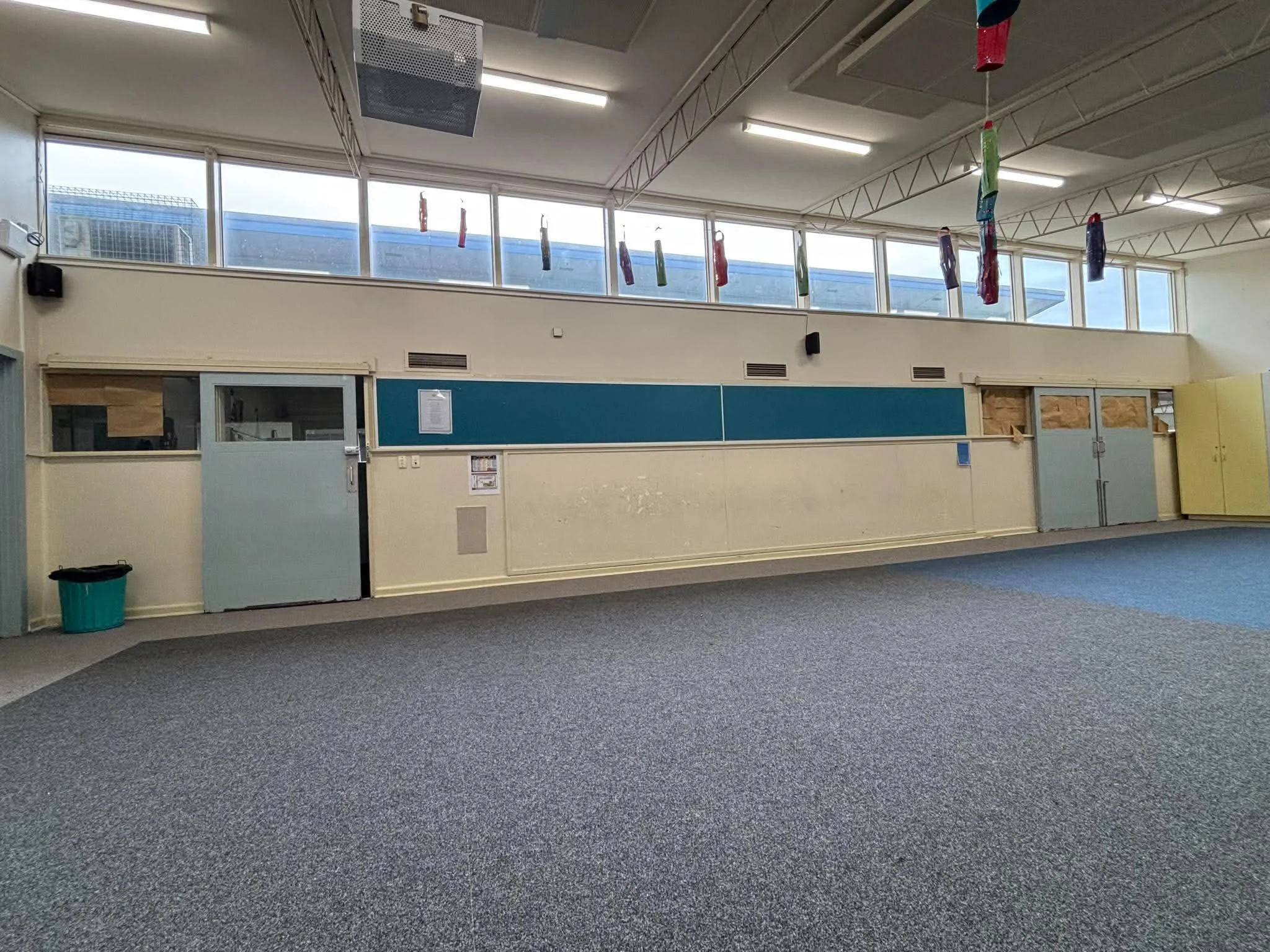
The existing utility space at Campbellfield Heights Primary School
The Brief
When Principal Susie Bellizia approached us, Campbellfield Heights Primary School needed a sensory wall decal for a multipurpose room used by students from Foundation to Year 6. The brief was clear from the outset, this could not be decoration. It needed to be a functional path that guided students along a wall, completing movement and mindfulness prompts at regular intervals to help them regulate, refocus and take a brain break during the day.
The requirements were specific. All artwork would sit on the walls only, with graphics large enough for every age group to interact with, prompts spaced at regular intervals to encourage flow, and simple icons paired with text so staff always knew what each step was for. The visual style needed to be nature inspired, bright and engaging, moving students through three walls, a regulating wall of gentle counting and tracking prompts, an active wall of animal movements and star jumps, and a calming wall of breathing and stretching cues.
Working with the school, the brief evolved into a full Amazon jungle and river adventure. The first wall became a riverbed scattered with rocks, dragonflies and butterflies. The second moved into a jungle scene with monkeys, giraffes, frogs and colourful birds. The third opened into a clearing that followed a full day timeline, from sunrise through clouds to a starry night sky.
Designing the Journey
Rather than a single image or a row of generic decals, we designed Campbellfield Heights as one continuous story: an Amazon jungle and river adventure that immerses a child through the same three stage journey behind every Sensory Signs storyboard.
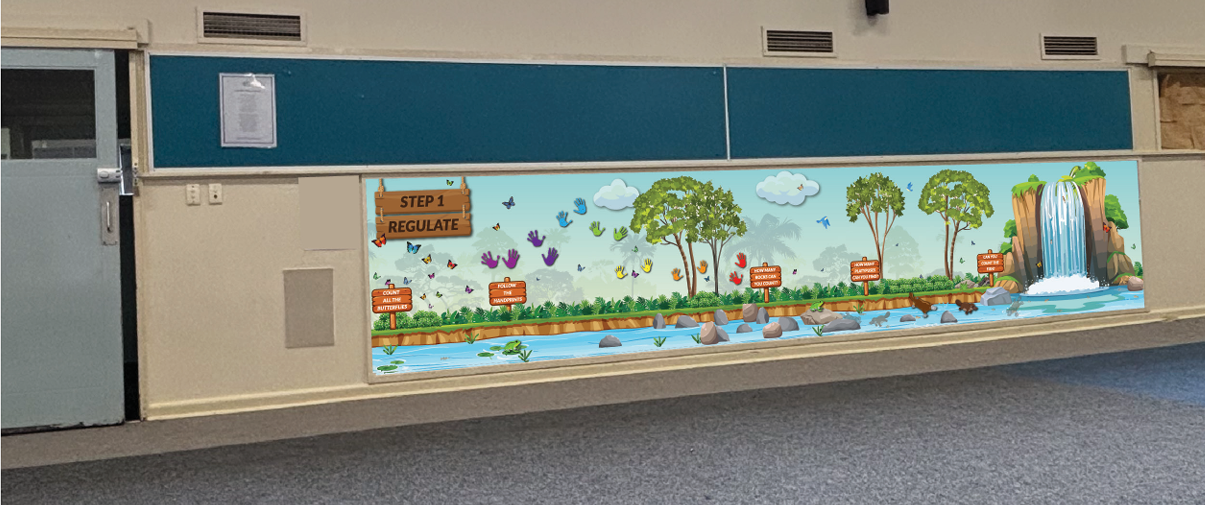
Step 1: Regulate The wall opens with gentle counting and tracking prompts, giving a busy body somewhere calm to arrive. Children count the butterflies, follow the handprints, and count the platypuses and fish in the waterfall.
Step 2: Activate The path then moves into movement. Children follow the Possum Path, leap like a frog, jump like a kangaroo and walk like an emu, burning off the energy a corridor transition often stirs up.
Step 3: Calm The journey lands back in stillness. Children spread their wings like a cockatoo, stretch like a snake and breathe with the koalas, finishing on "I am ready to learn."
The whole sequence was drawn by our own design team to the school's brief, in a palette chosen to support regulation rather than add to sensory load, not pulled from a template or generated by AI.
From Mockup to Installed Wall
Before anything was printed, the school saw the full storyboard mockup across the whole space and approved it. Once signed off, we printed to a durable, regulating finish and installed it ourselves.
Why It Works
The storyboard sits within the Australian Student Wellbeing Framework and Victoria's Disability Inclusion guidance as a consistent visual support across a shared school space. It mirrors the Zones of Regulation® language many students already learn in the classroom, without duplicating it or replacing any individual OT plan already in place for a student.
It is not a clinical program. It is a standing, always available prompt on the wall that backs up the regulation work a school is already doing, every day, for every child who walks past it.
Thinking About a Storyboard for Your Own Space?
Every project starts with a walkthrough. Book a Sensory Consultation and we will arrange a time that suits you, or see more projects to explore what a storyboard could look like in your space.